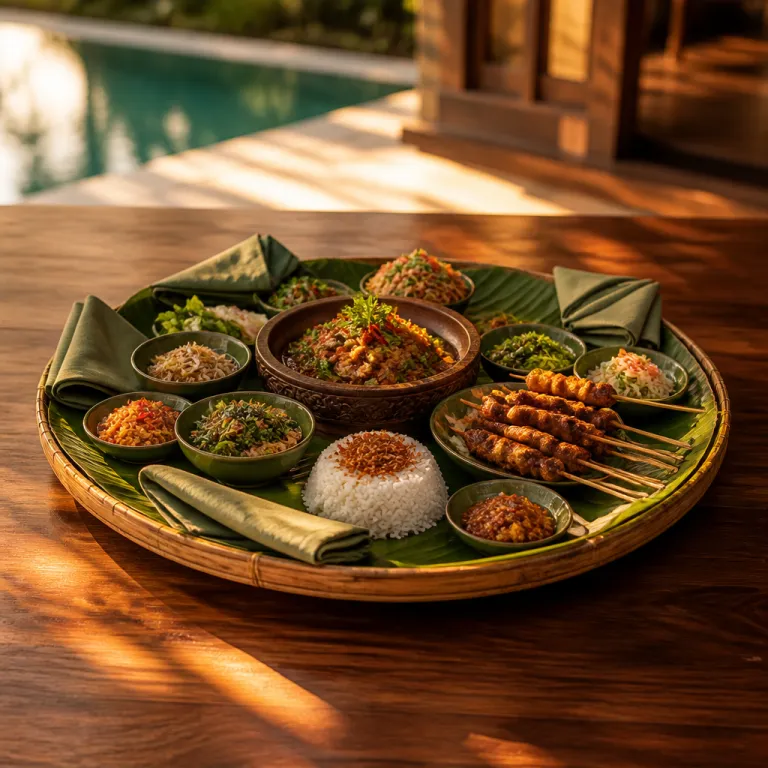
From Karangasem courtyards to balinese megibung luxury hotel lawns
On Bali’s eastern flank, in Karangasem, megibung communal feasts still anchor village life. This traditional Balinese dining format gathers a family or community around one shared platter, turning rice and side dishes into a quiet social contract. At a high-end resort in Bali that offers a megibung-style dinner, that same gesture is translated into a curated experience that must balance cultural integrity, guest comfort and high service expectations.
Most local accounts, including regional cultural briefings and interviews with Karangasem elders, suggest that megibung began as a royal practice in the Karangasem court before filtering into everyday ceremonies, with each person kepitu or more sharing from banana leaf lined trays. Expect a full spread of lawar, sate lilit, urutan and vegetables, all bound by base genep, the rich spice paste that defines much of Balinese cuisine. When a resort stages megibung traditional dining, the question is whether you still feel part of a living community or simply an audience for hotel theatre.
In Karangasem, the meal usually unfolds on the ground, men and women sometimes seated separately, and the rhythm of the day dictates the pace. At a balinese megibung luxury hotel in south Bali, the same format might move to manicured lawns or a cliff edge pavilion, with staff quietly managing courses over several hours. The best properties keep the shared rice platter and hand to mouth etiquette, while discreetly handling hygiene, tax and dietary requests that modern travelers will expect.
How luxury resorts reinterpret megibung without losing its soul
Not every resort megibung is created equal, and the differences matter if you care about culture. Some Bali properties reduce megibung traditional elements to a photo friendly prop, while others work with local priests and village elders to frame the experience. For business leisure travelers extending a stay, this is where you decide whether your balinese megibung luxury hotel dinner is a meaningful encounter or a themed night.
At Jumeirah Bali in Uluwatu, for example, the megibung style experience is typically anchored by a hand washing ritual before guests sit around a large shared plate. The resort has publicly highlighted partnerships with local farmers and cultural performers, so the rice, vegetables and pork on your banana leaves can be traced back to specific suppliers rather than generic banquet cuisine. Their dining information keeps the essentials clear: megibung is presented as a traditional Balinese communal dining experience, vegetarian options are usually available on request, and bookings are handled through Jumeirah Bali’s dining reservations team.
Elsewhere in Bali, fine dining operators such as Locavore NXT experiment with communal formats that echo megibung without copying it plate for plate. You might sit at a long table, sharing courses that reference lawar or base genep, while service remains firmly in the realm of contemporary restaurant choreography. For travelers already intrigued by Indonesian ceremonies, it is worth reading broader cultural pieces on rituals and feasts, such as analyses of Pasola or Toraja rites, before choosing which balinese megibung luxury hotel experience will genuinely deepen your understanding.
Inside the plate : lawar, sate lilit and the architecture of the feast
What arrives on the banana leaves tells you instantly how seriously a property takes megibung traditional practice. At its core, the platter is built around steamed white rice, flanked by small mounds of lawar, grilled meats, vegetables and sambal that together create a full spectrum of flavor. In a balinese megibung luxury hotel setting, chefs often refine textures and presentation, but the underlying architecture of the cuisine should remain intact.
Lawar, a minced mix of vegetables, grated coconut and sometimes fresh blood according to many Balinese culinary practitioners, is the dish that most clearly signals a connection to everyday Balinese community life. Some resorts quietly omit the blood for international guests, yet still season with base genep so the spice profile stays rich and recognizably local. Sate lilit, skewers of minced seafood or meat wrapped around lemongrass, and urutan, Balinese sausage, usually complete the protein line up, with crisp vegetables and peanuts adding contrast.
At Jumeirah Bali, sample megibung menus often run to around ten distinct items, served over roughly three hours in the evening. That pacing allows the restaurant team to explain ingredients without turning the meal into a lecture, and you will enjoy the way each course builds on the last. When you evaluate a balinese megibung luxury hotel offer, ask how many dishes are served, whether the rice and accompaniments are sourced from nearby farms, and how the resort handles requests from guests who prefer lighter dining after a long day of meetings or walking tours.
How to book, what it costs and when to schedule it
For most luxury travelers, the practicalities of a resort megibung matter as much as the romance. Properties like Jumeirah Bali usually stage the experience in the evening, often between 18.00 and 23.00, with the communal meal itself occupying around three focused hours. You will enjoy it most if you arrive on time, lean into the hand washing ritual and treat the shared platter as a chance to reset after a full day of work or exploration.
Pricing varies by property, but expect a per person cost quoted in Indonesian rupiah, often as an all inclusive idr person rate subject to service charge and tax. Some hotels require a minimum of two or four guests, so a family or small group of colleagues can easily secure a private setting, while solo travelers may be invited to join a mixed community table. When you see person kepitu or similar phrasing on a menu, it usually signals a price structure based on the number of diners sharing one megibung traditional platter.
Advance reservations are essential, particularly at a balinese megibung luxury hotel where the kitchen orders specific cuts of meat and seasonal vegetables for the event. Most concierges will suggest scheduling megibung on your second or third day, once you have adjusted to Bali’s rhythm but before departure fatigue sets in. If your stay also includes serious spa time, consider pairing the feast with a hydrotherapy or wellness circuit on another evening, using resources such as in depth spa mapping guides to balance indulgent dining with restorative hours in the water.
Where megibung fits in a wider luxury Bali stay
Seen in isolation, a balinese megibung luxury hotel dinner is a memorable photograph and a satisfying meal. Woven thoughtfully into a longer itinerary, it becomes a lens on how Bali negotiates between ceremony, tourism and the expectations of high end travelers. The key is to let megibung sit alongside other cultural immersion activities rather than stand as your only encounter with Balinese tradition.
Plan one day around the feast itself, perhaps starting with a gentle walking tour through rice terraces or a visit to a local market where you can see base genep ingredients piled high. Return to your resort in the late afternoon, leave emails and skip content distractions behind, and allow the transition from daylight to evening to frame the communal dining ritual. Families might involve children in simple offerings making before dinner, turning the megibung into a shared family memory rather than just another restaurant reservation.
Across Bali, properties from Uluwatu to Ubud now compete to offer their own version of resort megibung, sometimes in collaboration with signature venues such as Kepitu Restaurant at The Kayon, where kepitu restaurant teams may adapt communal platters for special events. Whether you choose a clifftop lawn or a jungle deck, ask how the hotel’s Balinese staff are involved and how the experience supports the surrounding community. When those answers feel as carefully constructed as the rice and lawar on your plate, you will know your megibung traditional evening has earned its place in your travel story.
FAQ
What exactly is included in a balinese megibung luxury hotel experience ?
A typical balinese megibung luxury hotel experience includes a communal platter built around steamed rice, multiple side dishes such as lawar, sate lilit and vegetables, and a hand washing ritual before dining. At properties like Jumeirah Bali, the evening may also feature cultural performances or storytelling to frame the tradition. Expect the event to last around three hours, with service teams explaining each course while maintaining a relaxed, social atmosphere.
Is megibung suitable for vegetarians or guests with dietary restrictions ?
Most luxury resorts in Bali can adapt megibung traditional menus for vegetarians, pescatarians or guests avoiding pork and gluten. You should inform the hotel at the time of booking, so the kitchen can design alternative dishes that still reflect Balinese cuisine and use the same shared platter format. At higher end properties, dietary notes are handled discreetly, allowing everyone at the table to enjoy the experience together.
How far in advance should I book a resort megibung ?
Booking at least 24 to 48 hours in advance is advisable for any resort megibung, and longer notice is wise during peak seasons or for larger groups. The hotel needs time to coordinate with suppliers, prepare specific cuts of meat and vegetables, and arrange the physical setup of the communal table. For business travelers with tight schedules, asking your concierge to lock in a date when you confirm your room reservation is the safest approach.
What should I wear and how formal is the setting ?
Smart casual attire is the norm at a balinese megibung luxury hotel, with many guests choosing light shirts, dresses or resort wear that respects local culture without feeling stiff. Some properties offer optional sashes or traditional scarves to add a ceremonial touch, especially if the meal is held outdoors in a temple inspired pavilion. Footwear is usually removed if you sit on low cushions, so consider sandals or shoes that are easy to slip off.
Can children join a megibung, and is it appropriate for families ?
Families are generally welcome at megibung traditional dinners, and many resorts in Bali actively encourage children to join as a way of introducing them to local customs. Portions can be adjusted for younger diners, and spice levels moderated so they will enjoy the food without discomfort. If your children are very young, ask the hotel whether a slightly shorter format or earlier start time is possible, keeping the experience engaging for everyone.
References
Jumeirah Bali official dining information ; Locavore NXT chef communications ; Indonesian Ministry of Tourism cultural heritage briefings ; interviews with Balinese culinary practitioners in Karangasem.