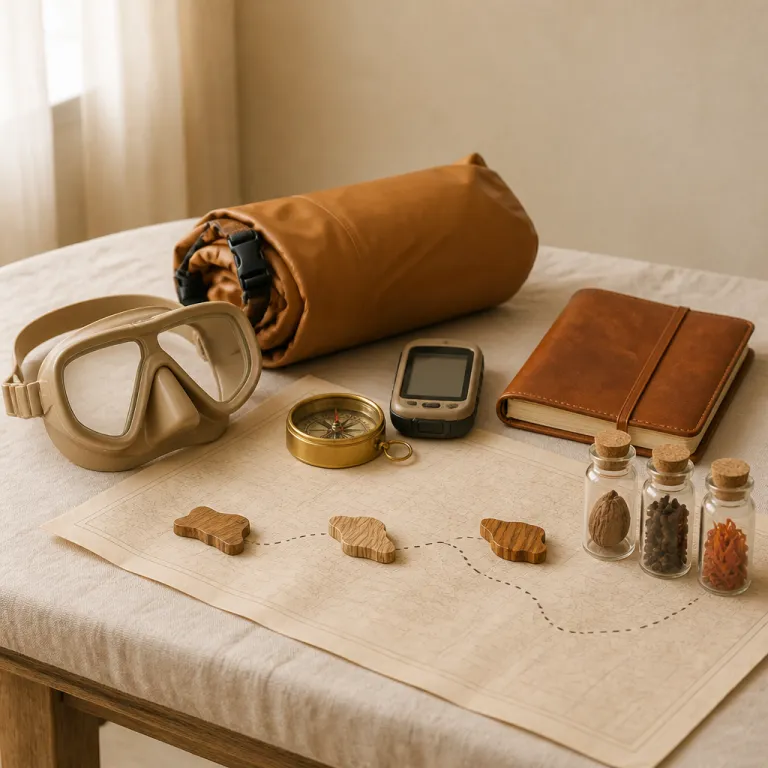
Why this three week Anambas–Banda–Spice Islands loop is the new Indonesian epic
This three week Anambas, Banda and Spice Islands route is not a first trip to Indonesia, and it is unapologetically ambitious. It is a looping journey that threads remote island Indonesia, from the Anambas archipelago in the north to the Banda Islands and onward through the historic Spice Islands of Maluku. You move across thousands of kilometres of water, and the reward is a sequence of private island style stays, liveaboard decks, and coral reefs that feel almost implausibly empty.
The route works best for travelers who already know Bali, perhaps have stayed in Ubud or Seminyak and are now ready for a different national park, a different rhythm, and a different definition of the best Indonesian experience. Here, the luxury is not a rooftop bar but a teak deck at sunrise, a crew that will set the kayak in the water before you are fully awake, and a captain who will set sail at dusk across the Banda Sea while you eat grilled fish. This is the kind of Anambas–Banda–Spice Islands journey that rewards those willing to fly small planes, accept imperfect connections, and embrace the honest fatigue of moving between islands for twenty one days.
Across this loop you will stay in a seaplane access reserve in Anambas, then shift to a heritage stay in Banda Neira, and finally board a private charter phinisi that crosses Maluku from Ambon towards Ternate. Each day itinerary balances diving and snorkeling with time on land, walking through nutmeg plantations on Banda Besar or exploring quiet pulau villages where local life still runs on clove and sea. The cost is significant, from roughly 25,000 to 60,000 US dollars per person depending on cabin category, level of Indonesia private guiding, and how often you choose a fully private charter rather than a shared expedition vessel; this range reflects recent quotes from high end operators running similar three week Indonesia private arrangements and publicly listed rate bands from Bawah Reserve and Indonesia based yacht brokers as of 2023–2024.
Week one: Anambas and Bawah Reserve as your soft landing
The loop begins in Singapore or Jakarta, but the psychological starting point is the seaplane that drops you into the Anambas Islands and Bawah Reserve. This is where the wider Anambas–Banda–Spice Islands route first reveals its intent, because you are not just flying to an island in Indonesia, you are landing on a lagoon that feels like a private island world. The reserve sits in a protected bay, ringed by coral reefs that make the water an impossible palette of blues and greens.
There are more than two hundred islands in the Anambas group, yet your first few days will likely orbit around Bawah’s main lagoon, its overwater villas, and the quiet ritual of waking to a tray of coffee on your deck. A typical itinerary day here might start with a guided snorkeling session over shallow coral gardens, followed by a paddleboard excursion to an uninhabited pulau where the only footprints are your own. In the afternoon, you can join a local guide for a slow boat across the bay to a neighbouring island Indonesia fishing village, where the experience is less about curated luxury and more about understanding how remote communities live with and from the sea.
For travelers used to Bali’s density, Anambas offers a reset before the more intense cross archipelago travel to come. You will feel the pace slow, yet the resort équipe keeps the logistics invisible, from arranging light diving sessions to timing your seaplane so that you arrive rested for the next leg towards Maluku. If you want to benchmark this against more classic luxury areas, look at curated lists of the best hotels in Indonesia that go beyond Bali, such as a seasonal shortlist of properties that many Bali only lists keep missing, and you will see how rare this level of remoteness and service combination really is. For planning, note that Bawah Reserve typically operates year round but often recommends the drier months from roughly April to October for the calmest seas and most reliable seaplane transfers; recent resort guidance suggests flight times of around 70–80 minutes from Batam and advises booking several months ahead in peak season.
Week two: Banda Islands base, history and deep water
From Anambas you route back through Batam or Jakarta, then fly east towards Ambon and on to Banda Neira, the small town that anchors the Banda Islands. This middle week of the Anambas, Banda and Spice Islands loop is where the narrative shifts from lagoon calm to layered history, because Banda was once the centre of the global nutmeg trade and still carries that weight in its forts and plantations. The flight sequence is not elegant, and you will feel the fatigue of multiple itinerary day hops, but the first view of Gunung Api rising from the Banda Sea tends to erase the memory of airport benches.
Base yourself in a restored colonial era house in Banda Neira, where the verandah looks straight across to the volcano and the harbour is filled with wooden boats that still set sail at dawn. Your day itinerary here will alternate between land and water, with mornings spent diving over lava flow coral reefs off Gunung Api and afternoons walking through nutmeg groves on Banda Besar with a local guide who can explain how these islands once dictated European fortunes. The best rooms are simple but atmospheric, and while this is not a polished resort experience, the sense of place is unmatched anywhere else in Indonesia.
Many travelers choose to extend this Banda segment, trimming Anambas or the later Spice Islands leg, because the combination of diving, snorkeling, and cultural immersion is so dense. You will also find that the crew will adapt boat schedules and private charter options around weather windows, especially if you are planning to continue by sea towards other parts of Maluku. For those comparing seasonal patterns, resources that map where the smart money books for July and August in Indonesia can help you decide whether to prioritise Banda or shift more time towards regions like Raja Ampat or even Komodo National Park in a different trip; most Banda focused liveaboards favour the calmer seas of roughly March to early December, avoiding the peak of the wettest months, and sample ferry timetables on the Ambon–Banda Neira run typically show overnight crossings of around seven hours when seas cooperate.
Week three: Spice Islands phinisi, Ambon to Ternate via Maluku’s outer arcs
The final week is where the Anambas–Banda–Spice Islands itinerary becomes a true expedition, as you board a phinisi style yacht in Ambon for a private charter or small ship journey through the wider Spice Islands. From here, the route can be tailored, but a classic line will set a course northwards, threading between lesser known pulau groups and sometimes detouring towards the Kei Islands or the eastern edges of the Banda Sea. This is not a cruise in the conventional sense; it is a moving base camp where your cabin opens directly onto a teak deck and the horizon is your only neighbour.
Each day you wake to a different bay, often with no other boats in sight and only the faint outline of an island Indonesia village onshore. A typical itinerary day might begin with a dawn dive over untouched coral reefs, followed by a late breakfast while the crew will raise anchor and set sail towards the next anchorage. In the afternoon, you might go ashore to meet local communities in Maluku, walk through clove drying yards, or hike to a viewpoint that looks across a chain of islands that once defined the global spice trade.
Some itineraries continue all the way to Ternate, linking the narrative arc from Banda and Ambon to another historic spice hub, while others loop back towards Ambon for easier flight connections. Either way, the physical reality of three weeks at sea and in the air will be clear by now, and this is why this loop suits travelers on at least their third Indonesia journey, comfortable with small planes and flexible schedules. If you want to contrast this with a more grounded luxury stay, you can always pair a future trip with a refined escape in Bali’s best areas for premium hotels, using that as a softer counterpoint to the rawness of Maluku and the Spice Islands; many travelers choose to book a few nights in Seminyak, Ubud, or Nusa Dua at the end of a separate voyage for that purpose, often timing those visits for the May to September dry season when international connections are most frequent.
Logistics, costs, and when to bend the itinerary
Planning this Anambas–Banda–Spice Islands route requires an acceptance that Indonesia is a vast archipelago where connections are often indirect. You will likely work with specialist tour operators and local guides who understand the flight patterns between Jakarta, Batam, Ambon, and Banda Neira, and who can secure reliable boats between islands when public ferries are limited. As one practical note from regional travel guidance puts it, “Book ferries in advance due to limited schedules,” especially on routes such as Ambon–Banda Neira, where sailings can be weekly or even less frequent depending on the season and where recent schedules from operators like Pelni and Express Bahari show that departures may shift at short notice.
The financial commitment is substantial, because you are combining a high end island resort, multiple domestic flights, and a week on a private charter or premium small ship. For a three week loop that includes Bawah Reserve, a characterful stay in Banda Neira, and a Spice Islands phinisi with a strong diving and snorkeling programme, expect a range from around 25,000 to 60,000 US dollars per person depending on cabin category and how private you want each segment. Indonesia private arrangements, such as chartering the entire vessel or booking a fully private island style villa in Anambas, will push you towards the upper end of that spectrum; recent sample quotes from reputable Indonesia based yacht brokers and Bawah Reserve’s own published rates align with this order of magnitude, though you should always cross check current pricing and domestic flight costs before finalising dates.
There are smart ways to bend the plan without losing its essence, especially if time or budget is tight. One option is to skip Anambas and start directly in Banda, giving you more days to explore Banda Besar, Gunung Api, and the surrounding Banda Islands before joining a shorter Spice Islands leg from Ambon. Another is to keep Anambas and Banda but trim the final week, perhaps saving regions like Raja Ampat, Komodo, Labuan Bajo, and Komodo National Park for a future voyage that focuses more tightly on diving and less on the historical spine of Maluku; this staggered approach also lets you target each region in its best season rather than forcing compromises, and makes it easier to align visas, health checks, and recommended travel insurance with a single climatic window.
Who this loop is really for, and how to choose your style of luxury
This Anambas–Banda–Spice Islands itinerary is built for travelers who already understand Indonesia’s basics and now want to engage with its more remote narratives. You should be comfortable with small aircraft, ferries that may leave earlier than scheduled, and the reality that a perfect day on the water sometimes follows a night in a simple transit hotel. The reward is an experience that threads together private island calm, living history, and some of the best diving and snorkeling in the country.
Solo explorers and couples who value depth over checklists will feel most at home here, especially those who have already stayed in Bali’s refined resorts and perhaps dipped into places like Labuan Bajo or Raja Ampat on previous trips. On this loop, luxury is defined by context; the offering the housekeeper places at your door each morning in Anambas, the way a Banda Neira host will share family stories on a shaded verandah, or the quiet efficiency with which a phinisi crew will set the tender and dive gear on the deck before sunrise. You are not chasing infinity pools so much as a sense of being exactly where you are meant to be, at the edge of the Banda Sea with Maluku’s islands on the horizon.
When choosing properties and vessels, prioritise operators with strong safety records, transparent environmental policies, and deep local partnerships. Look for Indonesia private charters that cap guest numbers well below capacity, both for comfort and for reef impact, and for island Indonesia stays that invest in local employment and training. If you calibrate your expectations around remoteness rather than perfection, this three week loop across Anambas, Banda, and the Spice Islands will feel less like a holiday and more like a long, coherent story told in bays, decks, and the changing colour of the water; a simple packing checklist that includes reef safe sunscreen, lightweight long sleeves, a compact dry bag, motion sickness remedies, and photocopies of your passport and visa will also make the practical side of that story easier to live.
FAQ
How do I get to the Anambas Islands at the start of this loop ?
Most travelers route via Singapore or Jakarta to Batam or Bintan, then continue by seaplane or ferry into the Anambas Islands. If you choose the ferry from Bintan or Batam, expect a journey of roughly seven to nine hours across open water, so plan your arrival day with some buffer. High end resorts such as Bawah Reserve usually coordinate these connections and will advise the best option for your specific dates, often recommending a morning arrival into Singapore or Jakarta to protect against delays and to allow time for immigration, baggage, and the 60–90 minute transfer to the seaplane terminal.
What activities are available in the Banda Islands during week two ?
The Banda Islands offer a strong mix of water and land based experiences that fit naturally into this three week itinerary. You can spend your mornings diving or snorkeling over healthy coral reefs, including the famous lava flow corals off Gunung Api, and your afternoons exploring colonial forts or visiting nutmeg plantations on Banda Besar. As one regional overview notes, “What activities are available in the Banda Islands? Diving, snorkeling, exploring colonial forts, and visiting nutmeg plantations.”
Are the Spice Islands safe for independent travelers on this route ?
The Spice Islands, including Banda and parts of Maluku such as Ambon and Ternate, are generally safe for travelers who follow standard precautions. Most luxury and premium itineraries operate with experienced local guides and established tour operators who monitor conditions and adjust routes if needed. Respecting local customs, dressing modestly in villages, and following crew guidance on shore excursions will help ensure a smooth experience.
How physically demanding is this three week Anambas–Banda–Spice Islands itinerary ?
The loop is moderately demanding because it combines multiple domestic flights, boat transfers, and days spent on the water, which can be tiring even in comfortable conditions. You should be able to manage stairs on boats, climb in and out of tenders, and handle short hikes on uneven terrain in hot, humid weather. Building in occasional rest days, staying hydrated, and packing light will make the physical side of the journey much more manageable.
Can I adapt this itinerary if I am more focused on diving than history ?
Yes, divers can easily tilt the balance of this loop towards underwater time while still keeping its overall structure. One option is to shorten the historical touring in Banda Neira and add extra diving days around Gunung Api and Banda Besar, then choose a phinisi route that emphasises remote reefs in the Banda Sea and Maluku rather than frequent village visits. Alternatively, you could save Anambas for another trip and extend the Spice Islands leg, or pair this route with a future expedition to Raja Ampat or Komodo National Park for a more intensive dive focus.